 (972) 256-8100
If you’ve ever Googled “how much does a website cost” and walked away more confused than when you started, you’re not alone. The answers range from “$50” to “$500,000,” and somehow both are technically correct. That’s the frustrating truth about website pricing — it depends on so many factors that generic answers are nearly useless.
This guide fixes that. Whether you’re a solo entrepreneur just starting out or a growing company ready for a serious digital presence, by the end of this post you’ll know exactly what to budget, where your money goes, and how to avoid the expensive mistakes most business owners make.
Let’s get into it.
WHO Is This Guide For?
This isn’t a guide for developers or tech geeks. It’s written for business owners, marketers, startup founders, and anyone who needs a professional website but doesn’t want to get ripped off or left in the dark.
You’ll benefit most from this article if you:
- Are building your first business website from scratch
- Are thinking about redesigning an outdated site
- Have received a quote from a web designer and want to know if it’s fair
- Are trying to decide between DIY website builders and hiring a professional
- Manage marketing budgets and need to justify the spend to stakeholders
If any of that sounds like you — keep reading. This one’s built for you.
WHAT Is the Real Cost of a Business Website in 2026?
Here’s the honest answer: a business website in 2026 can cost anywhere from $200 to $150,000+, depending on your goals, your industry, and who builds it.
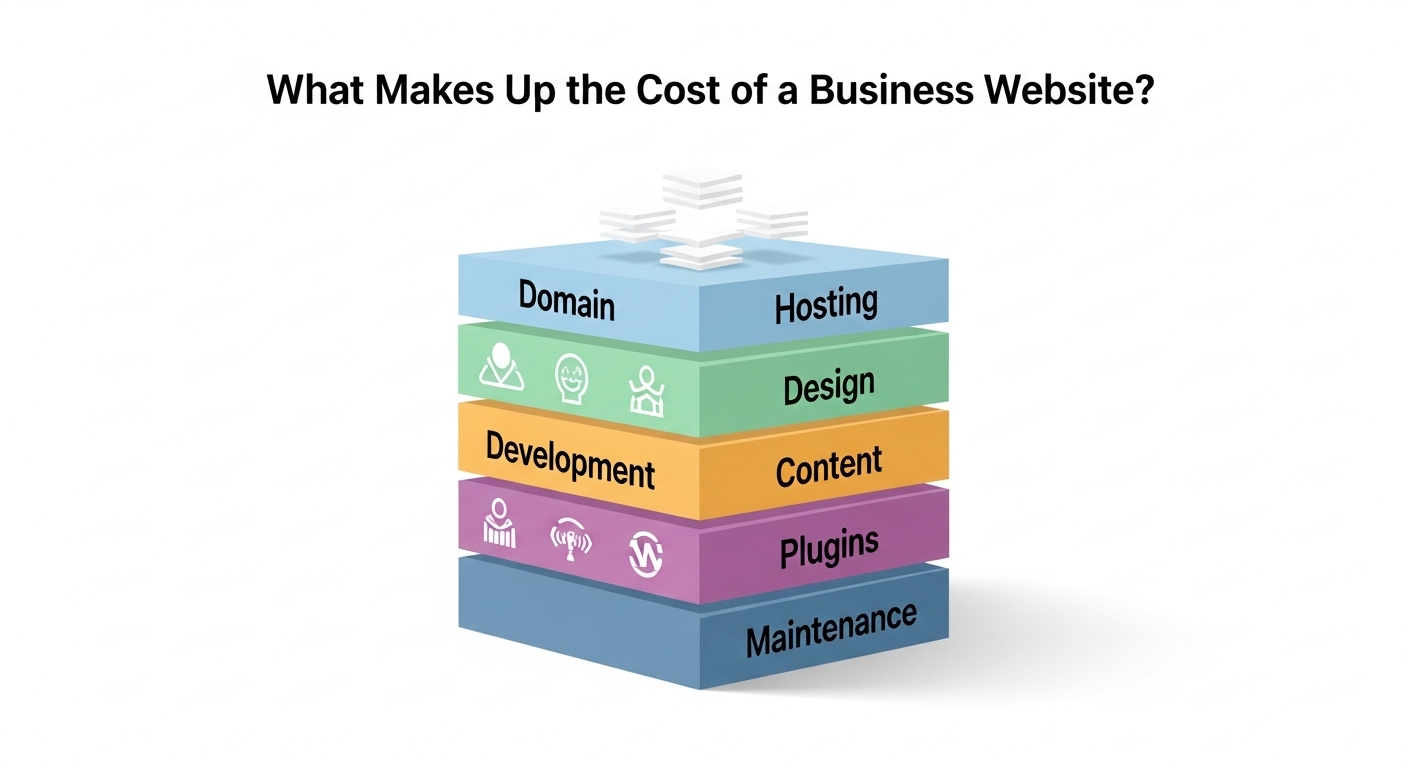
But that wide range isn’t helpful on its own. What actually matters is understanding the components that make up that total price — because every website, no matter how simple or complex, is built from the same core building blocks.
The Core Cost Categories Every Website Has
1. Domain Name Your domain (like yourbusiness.com) typically costs between $10 and $20 per year for a standard .com. Premium domains or brandable names can cost thousands upfront if you’re buying from a marketplace.
2. Web Hosting This is where your website “lives” on the internet. Hosting costs vary widely:
- Shared hosting: $3–$15/month (fine for small sites)
- VPS hosting: $20–$100/month (better performance, more control)
- Managed WordPress hosting: $25–$150/month (popular for business sites)
- Dedicated/enterprise hosting: $150–$500+/month (for high-traffic sites)
3. Website Design and Development This is usually where the biggest chunk of the budget goes. More on this in depth below.
4. Content (Copy + Images + Video) Many business owners forget this cost entirely. Professional copywriting, stock photography, custom photography, or video production can add $500 to $10,000+ to your project.
5. Plugins, Tools, and Integrations CRM integrations, booking systems, live chat, email marketing tools — each one adds to the overall bill.
6. Ongoing Maintenance Websites aren’t a one-time purchase. They need updates, security patches, backups, and occasional improvements. Budget $50–$500/month for ongoing care.
WHY Website Costs Matter More Than Ever in 2026
Here’s something a lot of business owners don’t fully feel until it’s too late: your website is your most important salesperson. It’s working 24 hours a day, 7 days a week, making first impressions, answering questions, and either converting visitors into customers — or sending them straight to your competitor.
In 2026, the digital landscape has never been more competitive. Attention spans are shorter. User expectations are higher. Google’s ranking algorithms reward fast, mobile-first, technically sound websites. And consumers? They judge a business in under 3 seconds based on how a website looks and feels.
Underspending on your website isn’t saving money — it’s losing revenue silently, every single day.
At the same time, overpaying for features you don’t need is just as damaging to your business. A local bakery doesn’t need a $60,000 custom-built e-commerce platform. And a SaaS startup definitely can’t afford to launch with a $300 template that looks like every other site from 2018.
Knowing the real cost — and where every dollar goes — gives you power. It helps you negotiate better, plan smarter, and invest with confidence.
HOW Much Does Each Type of Business Website Cost?
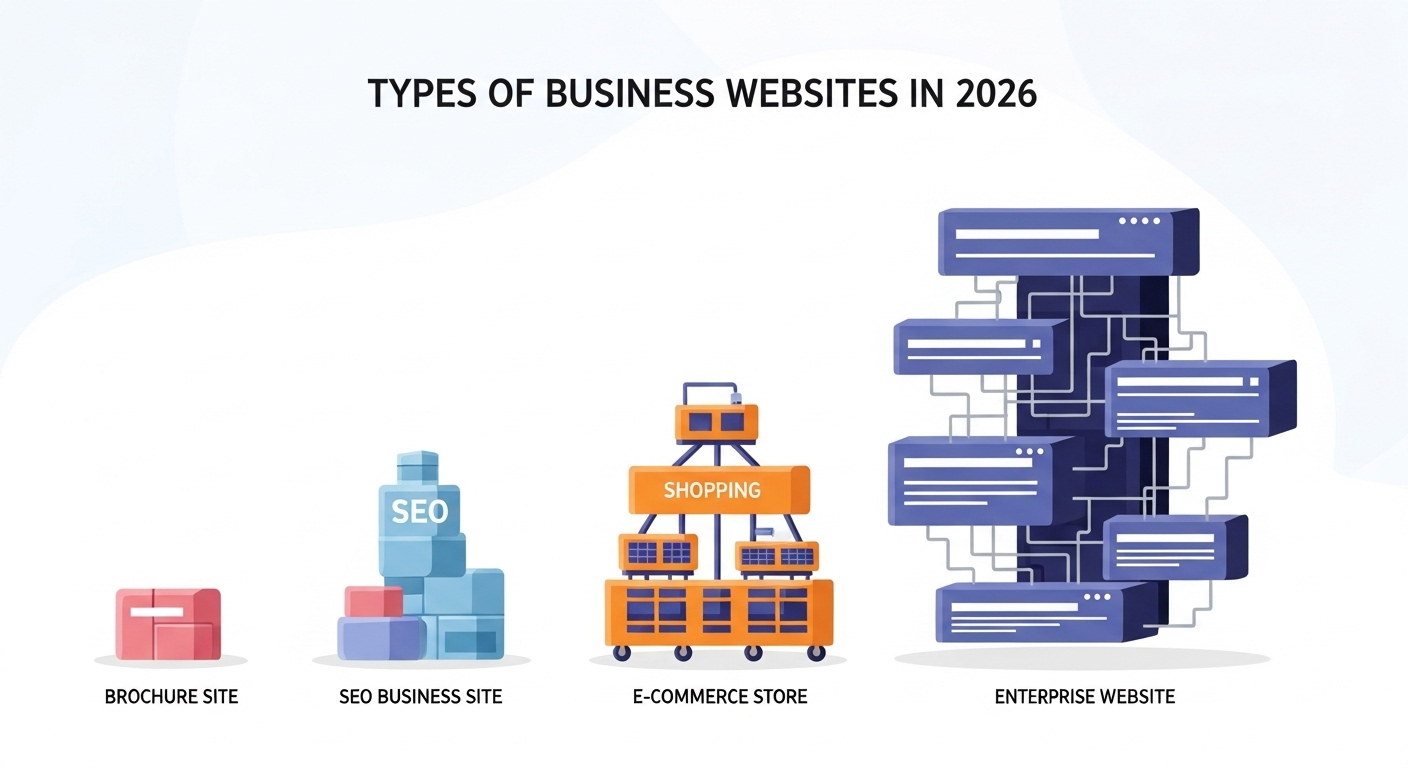
Let’s break this down by the most common website types businesses need in 2026.
1. Simple Brochure / Informational Website
What it is: A clean, professional site with 3–8 pages. Home, About, Services, Contact. Maybe a blog.
Who it’s for: Local businesses, service providers, consultants, freelancers.
Cost breakdown:
- DIY with a builder (Wix, Squarespace, Webflow): $200–$600/year total
- Freelance designer/developer: $1,500–$5,000 one-time
- Small agency: $3,000–$10,000
Realistic scenario: A licensed electrician in Dallas wants a simple 5-page website to rank locally on Google and get quote requests. A clean, well-built WordPress site from a mid-level freelancer would run around $2,500–$4,000 — and it would pay for itself within weeks if even one or two new customers come through it.
2. Business Website with Blog and SEO Features
What it is: A full business site with a content strategy built in. Blog, landing pages, local SEO optimization, Google Search Console setup.
Who it’s for: Businesses serious about organic traffic growth.
Cost breakdown:
- Freelancer: $3,000–$8,000
- Mid-size agency: $7,000–$20,000
- Ongoing SEO retainer (optional but powerful): $500–$3,000/month
3. E-Commerce Website
What it is: A full online store with product listings, shopping cart, payment processing, inventory management, and order tracking.
Who it’s for: Retail businesses, product brands, boutique shops.
Cost breakdown:
- Shopify (DIY): $39–$399/month + transaction fees + theme ($0–$400 one-time)
- WooCommerce with freelancer: $3,000–$15,000
- Custom e-commerce build with agency: $15,000–$75,000+
Important note: For e-commerce, the number of products, payment gateway requirements, and whether you need wholesale/retail tiers will dramatically shift your costs.
4. Membership or Subscription Website
What it is: A site with gated content, user logins, recurring payments, and community features.
Who it’s for: Coaches, educators, course creators, niche communities.
Cost breakdown:
- DIY platforms (Kajabi, Teachable): $150–$400/month
- Custom WordPress build: $5,000–$25,000
- Fully custom development: $30,000–$80,000+
5. Corporate or Enterprise Website
What it is: A large, complex website with multiple departments, integrations with internal systems (like CRMs and ERPs), multilingual support, advanced security, and custom functionality.
Who it’s for: Mid-to-large companies, enterprise organizations.
Cost breakdown:
- Mid-tier agency: $20,000–$60,000
- Enterprise agency or full in-house team: $60,000–$500,000+
- Annual maintenance: $10,000–$50,000+
The DIY vs. Professional Build Decision
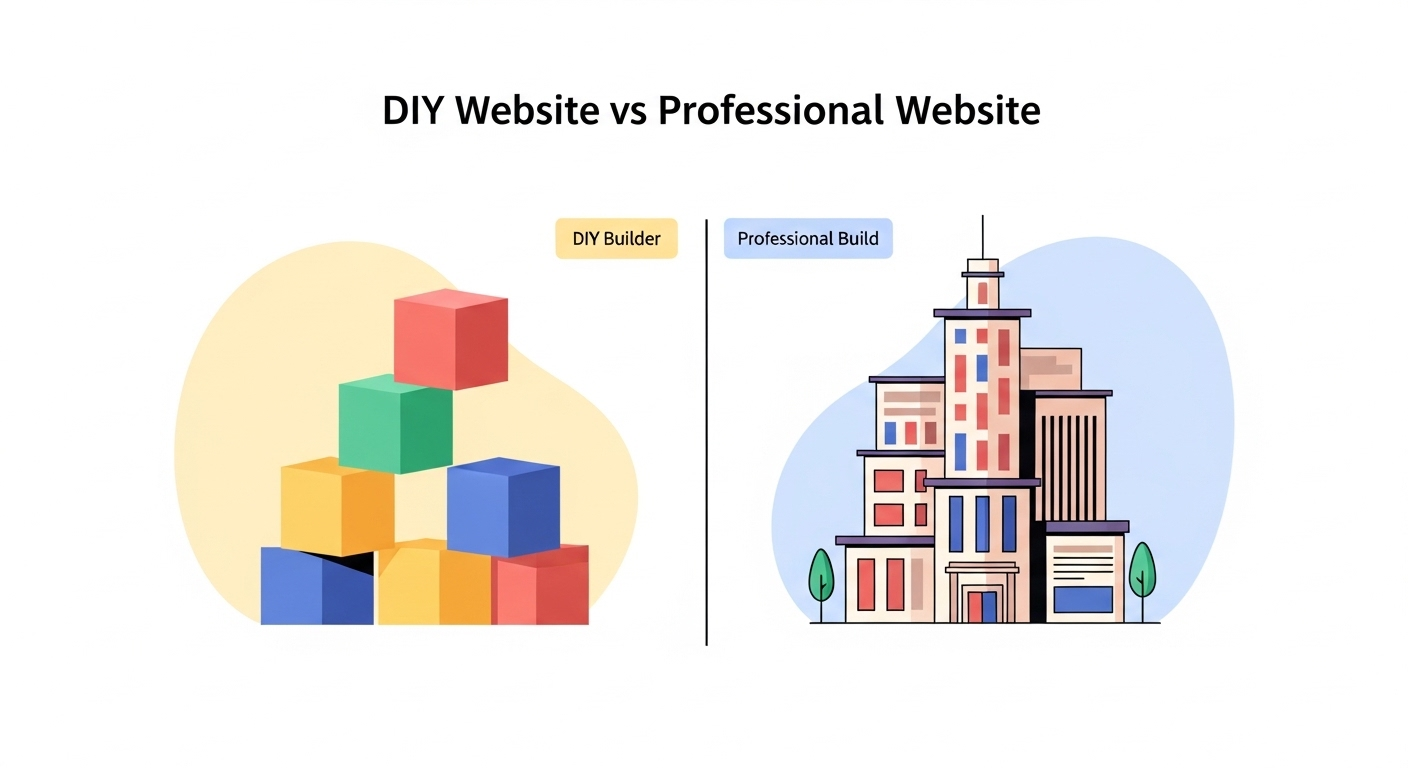
This is the fork in the road every business owner hits — and it’s worth taking seriously.
When DIY Makes Sense
- You’re just starting out and have more time than money
- Your website is a simple portfolio or single-service page
- You’re testing a business idea and don’t need anything polished yet
- You’re comfortable with technology and can maintain it yourself
Popular DIY platforms in 2026 include Squarespace, Wix, Webflow, and WordPress.com. These tools have gotten impressively good, and for the right use case, they’re completely legitimate options.
When You Should Hire a Professional
- Your website directly drives revenue (lead gen, e-commerce, bookings)
- You want to rank on Google and need proper technical SEO
- Your brand image matters and you can’t afford to look amateur
- You don’t have time to maintain it yourself
- You need custom functionality no template can provide
The uncomfortable truth: a beautiful Squarespace site built by someone who doesn’t understand SEO or conversion strategy is still a liability. Design and functionality are both critical — and most DIY users only focus on looks.
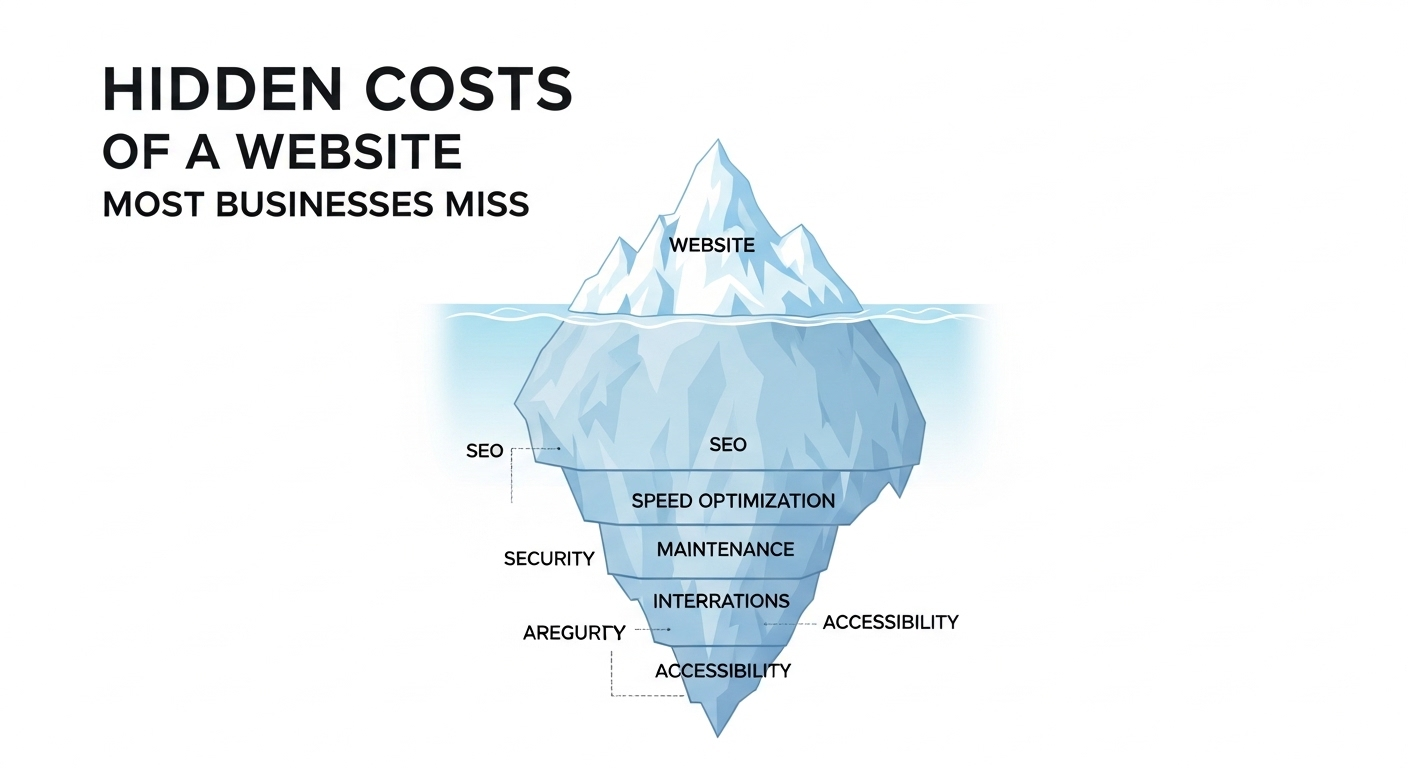
Hidden Costs Most People Never See Coming
This section could save you thousands. Here are the costs that routinely blindside business owners:
SSL Certificate Required for security and Google ranking. Most modern hosts include it free, but some charge $50–$300/year. Always confirm upfront.
Website Speed Optimization Slow sites kill conversions and hurt SEO rankings. If your developer doesn’t include this, expect to pay $200–$1,500 extra.
ADA / Accessibility Compliance Increasingly important for legal protection. Accessibility audits and fixes can cost $500–$5,000 depending on your site’s complexity.
Stock Photography Licensing Using unlicensed images can get you sued. Quality stock photos from Shutterstock or Getty can run $50–$500+ depending on how many you need.
Website Redesign Every 3–5 Years Websites have a shelf life. Technology changes, user expectations evolve, and designs age. Plan for a refresh cost in your long-term budget.
Email Hosting Your professional email (you@yourcompany.com) often isn’t included in website hosting. Google Workspace runs $6–$18 per user per month.
How to Evaluate a Web Design Quote
Getting a quote from a designer or agency and not sure if it’s fair? Here’s a simple checklist to walk through:
- Does it include content strategy or just design? Design without strategy is just decoration.
- Is SEO setup included? At minimum, meta titles, descriptions, and Google Search Console should be configured.
- What CMS will the site be built on? Can you update it yourself, or will you be dependent on them forever?
- Is mobile optimization explicitly included? It should be non-negotiable in 2026.
- What’s the revision policy? How many rounds of changes are included before extra charges kick in?
- Is there a maintenance plan? What happens after launch? Who do you call when something breaks?
- Do they own your domain and hosting — or do you? Always make sure the assets are in your name.
Quick Reference: Business Website Cost Summary for 2026
| Website Type | DIY Cost | Freelancer | Agency |
|---|---|---|---|
| Simple Brochure Site | $200–$600/yr | $1,500–$5,000 | $3,000–$10,000 |
| SEO-Optimized Business Site | $300–$800/yr | $3,000–$8,000 | $7,000–$20,000 |
| E-Commerce Store | $500–$5,000/yr | $3,000–$15,000 | $15,000–$75,000+ |
| Membership/Course Site | $1,800–$5,000/yr | $5,000–$25,000 | $30,000–$80,000+ |
| Corporate/Enterprise | N/A | N/A | $60,000–$500,000+ |
Key Takeaways
- A business website in 2026 costs anywhere from $200 to $500,000+ depending on complexity
- Most small business websites fall in the $2,000–$10,000 range for a professionally built site
- DIY builders work for simple, low-stakes sites — professional builds are worth it when revenue is directly tied to your website
- Hidden costs like maintenance, speed optimization, and accessibility can add 20–40% to your budget
- Always confirm who owns your domain, hosting, and files before signing any agreement
- Think of your website as an investment with an expected return, not just a marketing expense
Conclusion: The Right Website Is Worth Every Penny
Here’s the bottom line: your website isn’t a cost. It’s a revenue-generating asset. Every dollar you invest wisely — in the right design, the right platform, the right strategy — comes back to you multiplied in leads, conversions, and brand credibility.
The businesses that treat their website like an afterthought are the same ones wondering why their competitor who launched last year is already dominating Google’s first page.
You now know what different types of websites actually cost in 2026, what drives those prices up or down, and how to evaluate whether a quote is fair. That knowledge is worth more than any generic price list.
Start with your goal. What do you want your website to do for your business — generate leads, sell products, build trust, rank on Google? Answer that question first, and the right budget will become clear.
If you’re ready to take the next step, talk to two or three professionals, ask the right questions from the checklist above, and go in with confidence. The right website is out there for your business — and now you know exactly what it should cost.

